
How index insurance works
A payout that starts with a number, not a visit
Index insurance pays out when a measured index — a rainfall reading, a vegetation index — crosses an agreed threshold, not when an assessor visits and verifies an individual loss. This page explains how that actually works: trigger and exit, basis risk, Unit Areas of Insurance, and why Earth-observation data makes it possible, in plain language and using the real terms Dalili's own platform runs on.
The basics
What index insurance actually is
Index insurance — also called parametric insurance — pays out based on a measured index crossing a threshold, rather than on an assessed individual loss. The difference sounds small. In practice, it changes almost everything about how a claim moves from event to payout.
Traditional
Indemnity insurance
- A loss happens — drought damages a crop, or livestock die.
- An assessor visits the affected farm and verifies that specific loss in person.
- The payout is calculated from that individual assessment, which can take weeks and depends on who visits and when.
Index / parametric
Index insurance
- An objective, publicly measurable index — a rainfall or vegetation index — is tracked for a defined area.
- When the index crosses an agreed threshold, a payout process begins automatically for everyone inside that area.
- No individual assessor visit is required to trigger it — the index itself is the trigger, not a proxy for one.
The mechanism
Trigger and exit: how a payout begins, and how much it pays
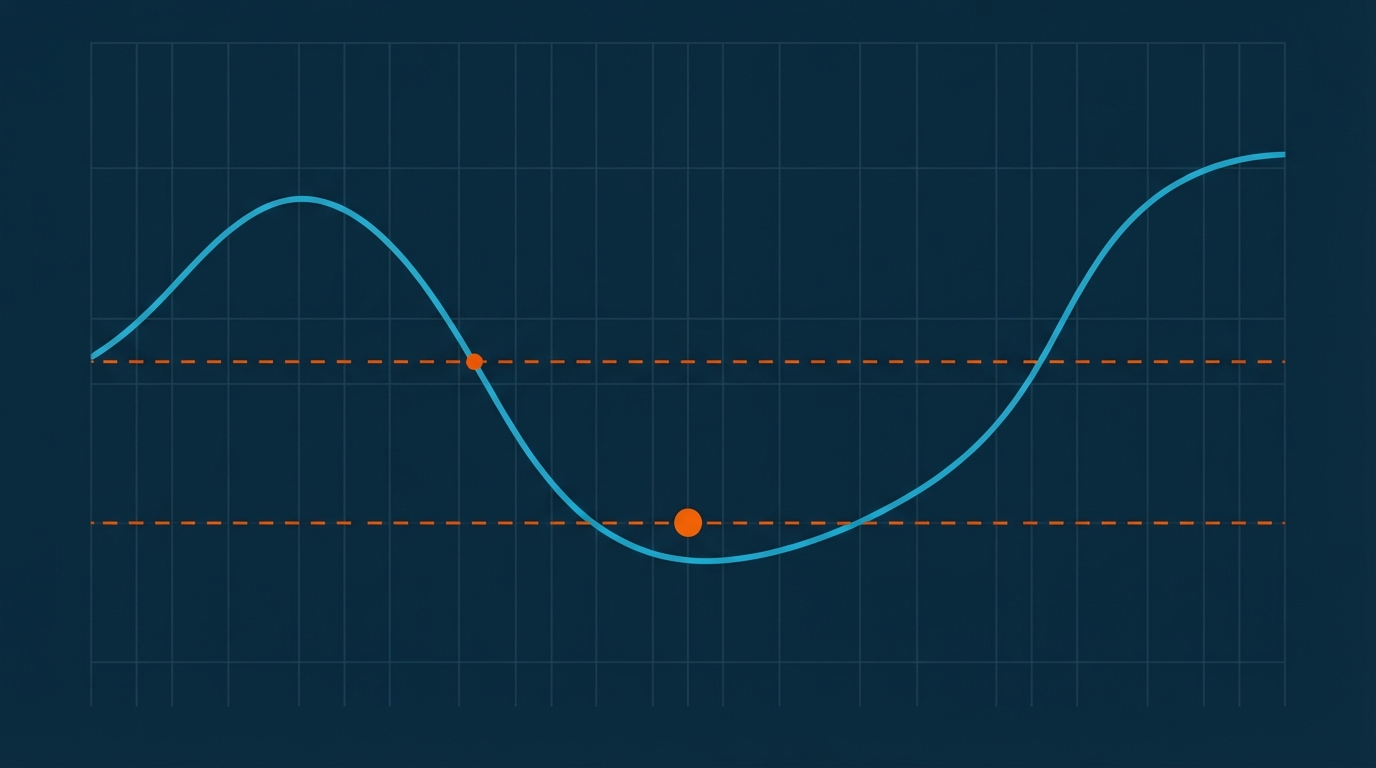
Every index insurance product is built around two thresholds set against the same index. The diagram below traces one modelled season through both of them.
Trigger
The index level at which a payout process begins. Above the trigger, the season is behaving normally and nothing pays out. The moment the index falls through it, a payout calculation starts — automatically, from the index reading, not from a claim someone has to file.
Exit
The lower index level at which the maximum payout applies. Between the trigger and the exit, the payout scales with how far the index has fallen: a small breach of the trigger pays a small amount, a fall all the way to the exit pays the full sum insured.
One more term
Franchise versus deductible
Two different ways to structure the first loss once the trigger is crossed. A franchise structure pays the full amount from the trigger; a deductible structure pays only the portion beyond it. Which one a product uses is a design decision, not a fixed default.
How Dalili structures this →The honest limitation
Basis risk: why the index is a proxy, not a measurement
Any index — a rainfall reading, a vegetation index, a drought severity score — is a proxy for what actually happened to an individual farmer or herder's crop or livestock. It is never a perfect, one-to-one measurement of that individual's loss. The gap between the two is called basis risk: the possibility that the index says one thing, payout or no payout, while the reality on a specific farm inside the same area says something else.
This is a structural feature of the whole index insurance category, not a flaw specific to any one insurer or advisor. Every real design decision in a parametric product — where the trigger sits, how large a Unit Area of Insurance is, how the index itself is calculated — is really a decision about how much basis risk to accept in exchange for the speed and objectivity an index-based approach makes possible.
In practice
The answer to basis risk isn't eliminating it — that isn't possible. It's drawing the Unit Area of Insurance small enough, and validating it carefully enough, that the index inside it genuinely reflects what's happening on the ground.
That's exactly what Unit Area of Insurance delineation, covered next, is built to do.
The geographic unit
Unit Areas of Insurance: not a line drawn in an office
A Unit Area of Insurance (UAI) is the geographic unit an index is calculated and applied over. Every policyholder inside the same UAI shares the same index, and the same trigger and exit. Drawing that boundary well is the single biggest lever a product design has over basis risk — and it is genuinely participatory work, not a shape fitted by a data team working from satellite imagery alone.
Earth observation
Satellite-derived vegetation, rainfall and soil-moisture data establishes the physical starting point — where conditions are genuinely similar enough that one index can fairly apply to everyone inside the boundary.
Rangeland management expertise
People who know the land — grazing patterns, seasonal movement, local agro-ecological boundaries — validate or correct what the data alone suggests, on the ground, before a boundary is finalised.
Actuarial science
The proposed boundary is tested against how the index would have priced and paid out across the historical record, so it holds up as a real underwriting unit, not just a defensible-looking map.
Why Earth observation
Why a satellite record instead of a farm visit
Traditional loss assessment means sending someone to physically visit and verify each affected farm — slow, expensive to run at scale, and dependent on who happens to be available and when. Earth-observation data replaces that with a continuous, objective record: the same satellite passes over every farm inside a Unit Area, on the same schedule, whether or not anyone is there to see it. That is why an index-based approach can act faster and scale further than an assessor-by-assessor model ever could.
It is also, honestly, the reason basis risk exists in the first place. An objective, scalable proxy is not the same thing as a first-hand assessment of what happened to one policyholder, and no amount of data resolves that trade-off on its own — only careful Unit Area delineation and product design narrow it.

Questions
Frequently asked
The three questions this page is most often asked, and a few more that come up alongside them.
What is basis risk?
Basis risk is the gap between what an index-based payout says happened and what actually happened to an individual policyholder on the ground. Because an index — a rainfall reading or a vegetation index, for example — is a proxy for real loss rather than a direct measurement of it, the index and an individual's real experience can occasionally diverge. It is a structural feature of the whole index insurance category, not a flaw specific to any one insurer or advisor.
What is a Unit Area of Insurance (UAI)?
A Unit Area of Insurance is the geographic unit an index is calculated and applied over — every policyholder inside the same UAI shares the same index, and the same trigger and exit thresholds. Delineating a UAI is participatory and done on the ground, combining Earth-observation data with rangeland management expertise and actuarial science, rather than being an arbitrary line drawn from satellite imagery alone.
Why use Earth-observation data instead of on-the-ground loss assessment?
Earth-observation data gives an objective, continuous record — the same satellite passes over every farm in an area on the same schedule — rather than depending on an assessor physically visiting and verifying each individual claim. That makes an index-based approach faster to act on and able to scale far beyond what an assessor-by-assessor model can reach, in exchange for the trade-off of basis risk: an objective proxy is not the same as a first-hand assessment of one policyholder's loss.
What's the difference between a trigger and an exit?
The trigger is the index level at which a payout process begins. The exit is a lower index level at which the maximum payout is reached. Between the two, the payout scales with how far the index has fallen — a small breach of the trigger produces a small payout, and a fall all the way to the exit produces the full sum insured.
What's the difference between franchise and deductible structuring?
Both are ways of structuring the first loss once an index crosses its trigger. A franchise structure pays the full amount from the trigger once it is crossed. A deductible structure pays only the portion of the loss beyond the trigger. Which structure a product uses is a design decision made for that specific product, not a fixed default.
Is index insurance the same as traditional insurance?
No. Traditional, indemnity-based insurance pays out based on an assessor verifying an individual policyholder's specific loss, which can take weeks. Index insurance pays out based on an objective, publicly measurable index crossing an agreed threshold for a defined area, which lets a payout process begin automatically without an individual assessment visit.
See how Dalili puts this into practice
Trigger, exit, Unit Areas of Insurance and Earth-observation data are the theory. Index Insure is where Dalili runs all of it as a real, working platform.